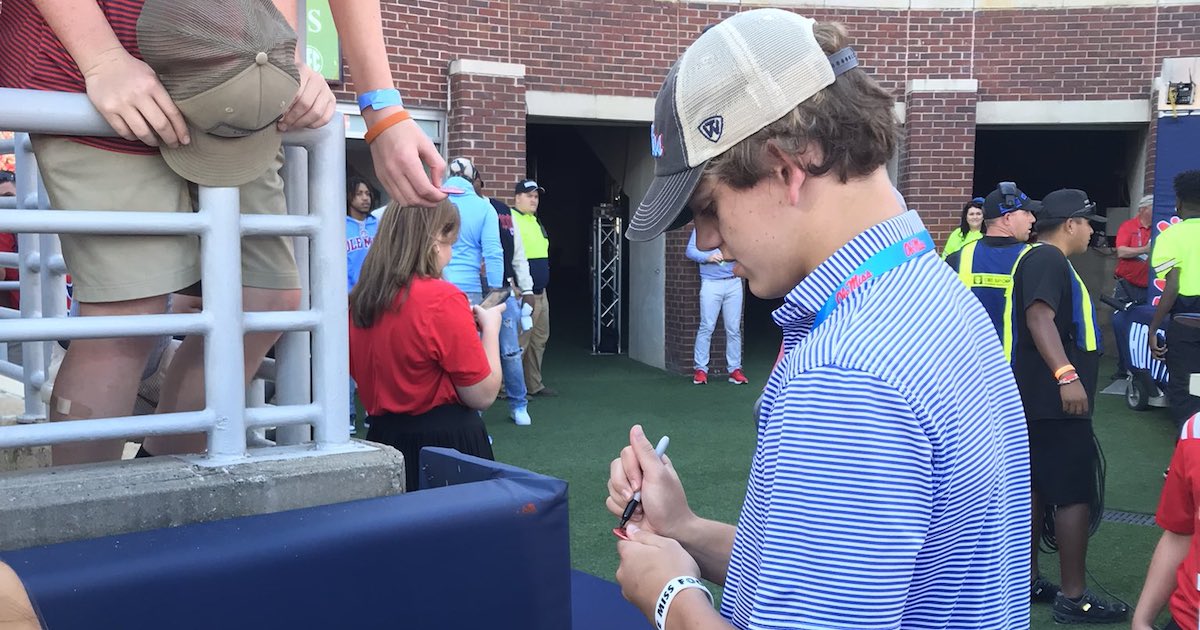
Arch Manning Ole Miss Transfer 2025
Arch Manning’s 2025 Transfer to Ole Miss Sparks College Football Rivalries and Redefines Teambuilding – In what promises to be a landmark move in Southeastern Conference (SEC) recruit acquisitions, Arch Manning, the 2025 top prospect at Ole Miss, has officially declared his intention to transfer to the University of Mississippi. The 6-foot-1, 215-pound quarterback, son of former Ole Miss standout Arch Manning, arrives amid growing anticipation over his early transfer timing and potential immediate impact on a program rebuilding under new head coach Jerod Mayo. His arrival not only reshapes Ole Miss’s long-standing transfer landscape but signals a bold shift in how college football powerhouses are redefining roster strategies in 2025.
Arch Manning, a consensus five-star recruit and dual-threat quarterback from Woodbridge, Virginia, completed what sports analysts describe as one of the most strategically significant transfers in college football.
After a standout high school season that included a 5–0 record, 3,200 passing yards, and 28 touchdowns alongside 7 interceptions, Manning declared three years of transfer eligibility, choosing Ole Miss — a rare move for a high-profile rim-launee with deep roots in the program. His decision overturns a decade of Ole Miss quarterback stability, following inconsistent play and injury issues under prior starters. Now, with the 2025 seasonfrei approaching, he steps into a roster gem poised to elevate offensive dynamics and fan engagement.
Timing, Strategy, and the Transfer Landscape of 2025 – Manning’s transfer window departure in late spring 2025 underscores a calculated, forward-thinking approach.
Unlike traditional transfer windows or senior summers, his move reflects a convergence of long-term planning and immediate need. Ole Miss, now entering its fifth season under Mayo, faces quarterback depth challenges after a transitional 2024 campaign. The program’s decision to welcome Manning early — before the start of fall drills — speaks to confidence in his collegiate experience and readiness.
“This isn’t just about adding talent,” Manning told journalists. “It’s about finding a program that values heritage, expects excellence, and aligns with my long-term goals.” With SEC schedules growing more competitive, transferring early allows Manning to bypass potential redshirt risks while hitting the field as a primary source of production.
Arch Manning’s game plan as a transfer emphasizes a dual threat style, combining arm strength with mobility — traits already shaping his collegiate identity. Early highlights from his practice camps at Ole Miss have shown improved pocket awareness and route-running precision, suggesting seamless integration into Mississippi’s offense.
Under coach Mayo, Manning could assume a foundational role starting immediately, potentially mobilizing a quarterback academy that prioritizes both physical development and mental conditioning. The football community watches closely, as his early performance may influence trasferés’ decisions across the landscape — particularly QBs in high-turnover recruiting classes.
Family Legacy Meets Individual Aspiration – Beyond football, Manning’s move resonates with the weight of a storied athletic lineage. The Manning family — he is the son of a former Ole Miss quarterback, brother to Heisman finalist Arch Manning Jr., and cousin to NFL standout Graham Manning — represents a rare blend of generational achievement and personal ambition.
While some view the transfer as a continuation of a football dynasty, Manning has repeatedly emphasized his individual journey. “Being part of this family isn’t about legacy,” he stated in a pre-transfer interview. “It’s about proving what I can build on my own terms — with the support of Ole Miss, but expecting excellence daily.”
Recruiters and analysts note that Ole Miss’s embrace of Manning sets a precedent for programs targeting ranked transfers with deep organizational need.
In an era where player agency and early movement redefine college football investing, the Manning acquisition signals a shift toward selective, high-impact signings rather than bulk roster turnover. The behind-the-scenes alignment between Ole Miss’s front office, Mayo’s coaching staff, and Manning’s representation underscores a deliberate effort to bridge past performance with future potential. Advance rumors link Manning to a key starting role, though contract negotiations and academic prerequisites remain fixtures in the timeline.
Regardless, his arrival marks a pivotal moment for the Gym, reigniting hopes for sustained success in a rugged SEC environment.
With Arch Manning’s transfer finalizing in early 2025, the Crimson Commodity program steps into a new era — one where legacy meets ambition, where family runs the tape, and where quarterback play is being reimagined through the lens of immediate impact and long-term vision. As miles separate him from his playing days at Ole Miss, Manning’s journey reflects football’s evolving narrative: not just where talent goes, but why, how, and what it means for the teams that catch it. For Ole Miss, 2025 just got a lot brighter — starting with a quarterback who wears both up the thread and into the spotlight.



Related Post
Arch Manning’s Transfer to Ole Miss 2025: A Catalyst for College Football’s Next Era

What Is Nancy McKeon Doing Now? Tracking the Iconic Performer’s Current Journey Across Stage, Screen, and Advocacy

Why Did Tracy Die In Himym? Unraveling the Tragic Truth Behind the Unveiling

Eric and Lara Trump’s Net Worth Unveiled: Exclusive Inside Scoop on Their Billionaire-Style Wealth